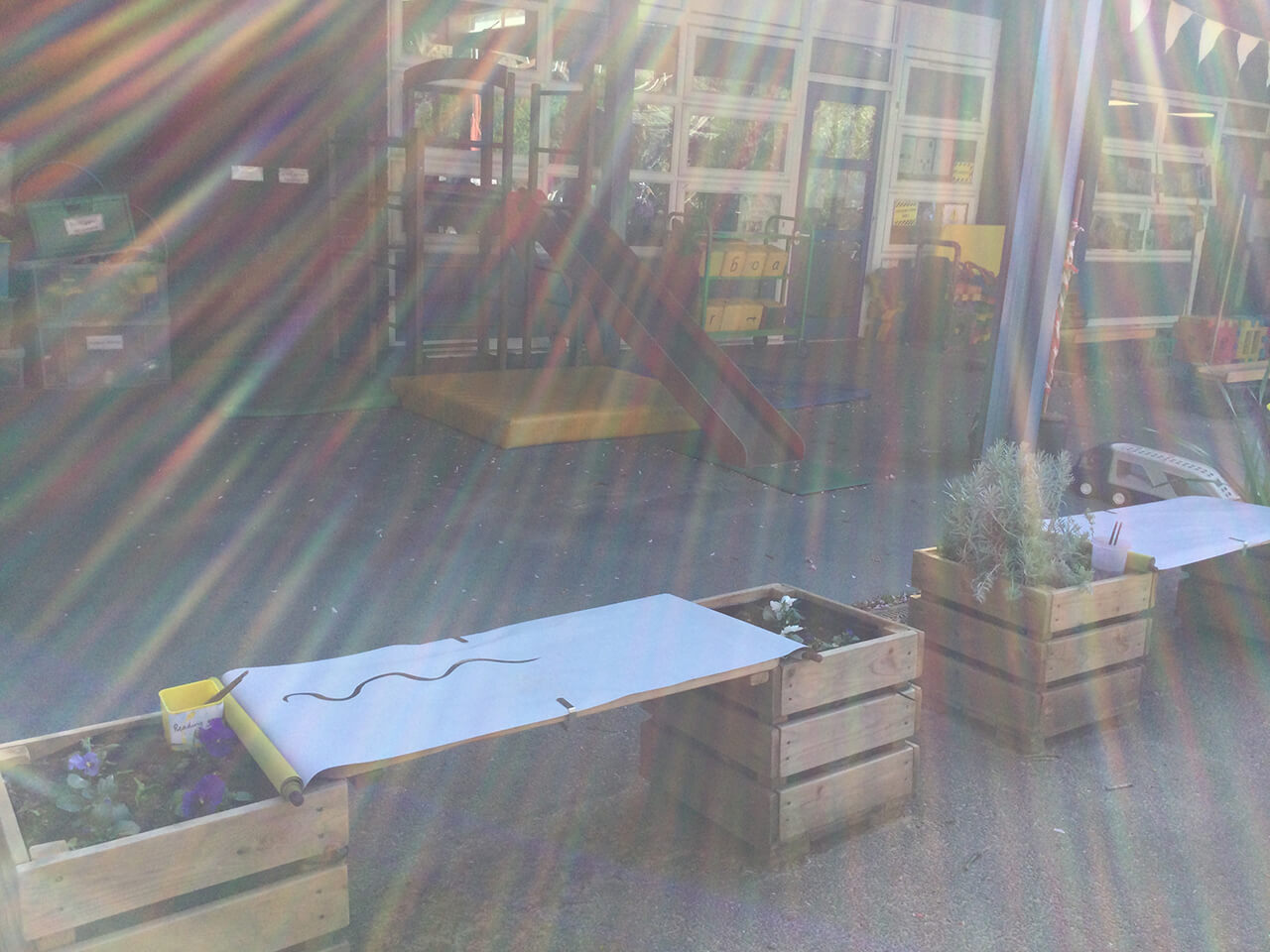
In our EYFS class, we have Nursery and Reception children.
Meet our EYFS Teachers


Nursery Teacher
Mrs McIlwaine

Reception Teacher
Mrs Lindsay

Teaching Assistant
MISS Ibrahim
Early Years Foundation Stage
What is the Early Years Foundation Stage (EYFS)?
This is the first stage in your child’s life, the time your child spends in our Nursery and Reception classes.
Our Nursery class offers part time education 5 days a week, each morning from 8:50 – 11:55am.
Should parents require 30 hours provision, there is an additional offer in place.
Our Reception offers full time education 5 days a week from 8:50 – 3:30pm.
Curriculum Rationale
That ALL our children in EYFS experience a broad and balanced curriculum with book sharing at the core of all our learning. That speech and language development is our priority.
That our children are happy, safe and developing well in all areas of learning.
To create a warm, friendly and nurturing environment, where everyone feels welcome and included.
- Develop positive relationships.
- Provide a safe, stimulating and nurturing environment where all children are given opportunities to reach their full potential.
- Put the care & welfare of the children at the heart of everything we do.
- Promote independent thinking, by encouraging children to make choices in their learning.
- Have an inclusive approach to learning, taking into account all levels of ability and developing minds.
- Encourage positive attitudes to learning by implementing fun, interesting and challenging experiences for all children.
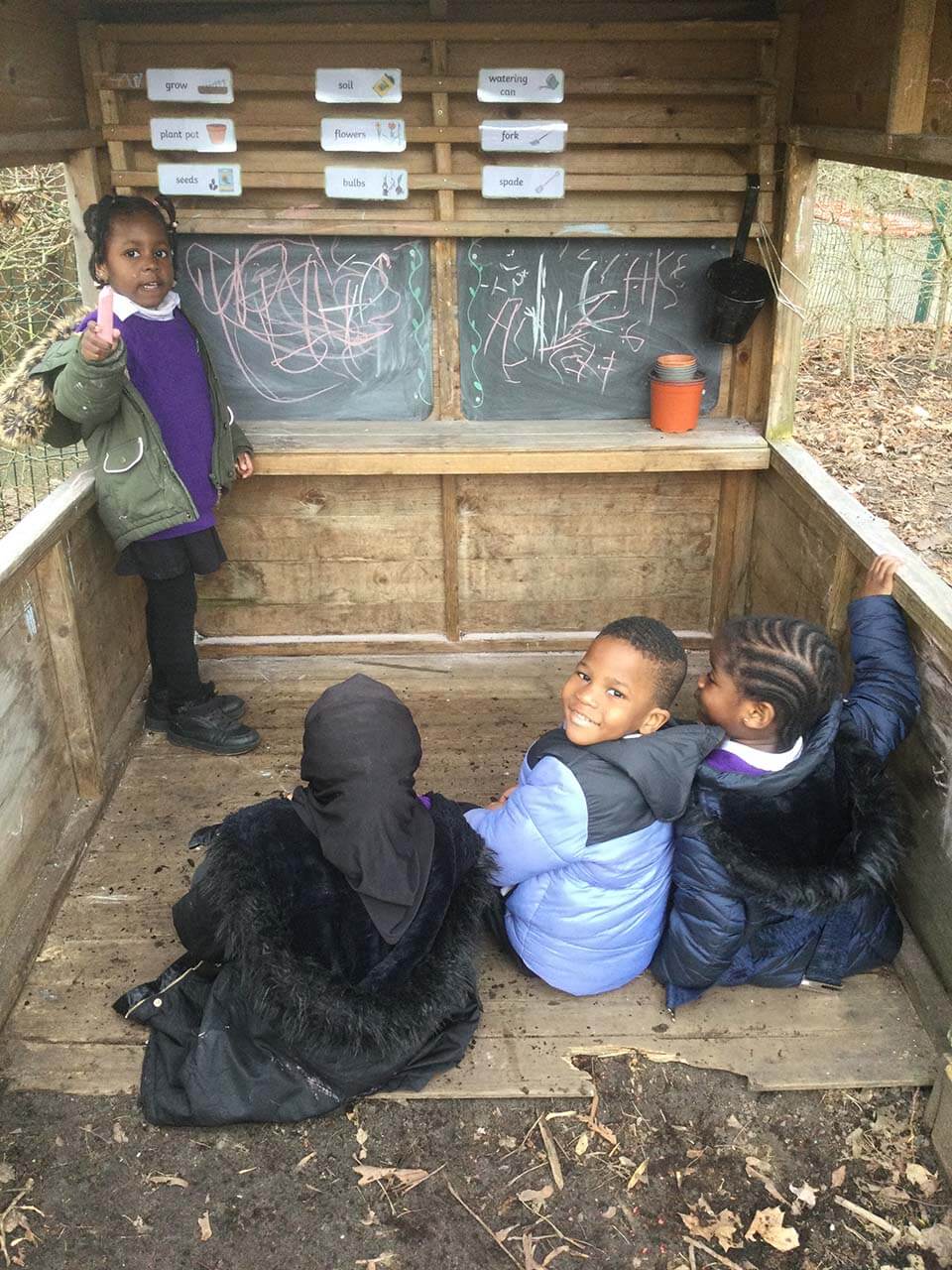
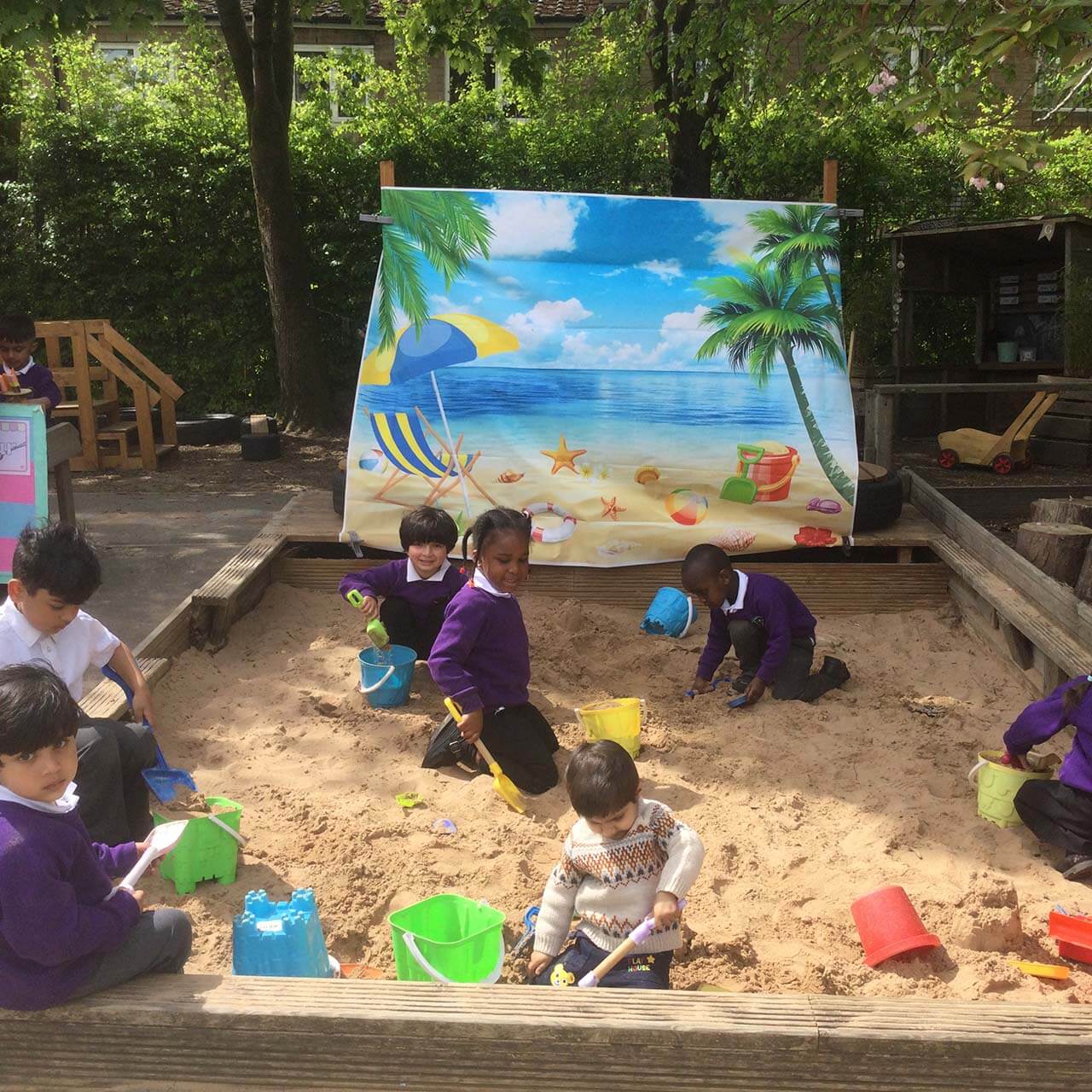
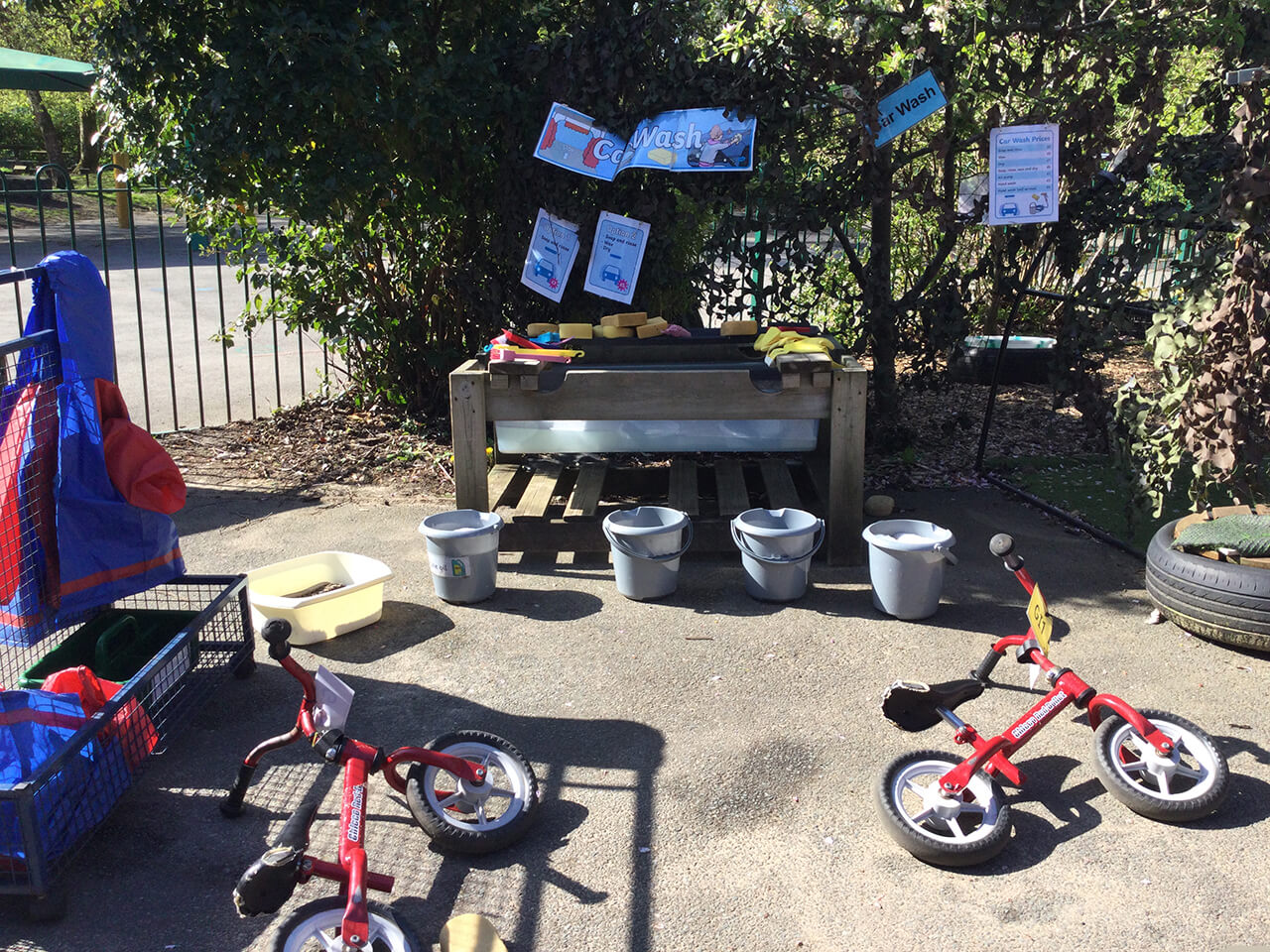
- Provide ample opportunities for outdoor play – to help our children develop their physical literacy.
- Encourage children to explore, appreciate and respect their environment indoors and outdoors.
- Develop partnerships with parents/carers and families.
- Link with the local community
Responsive and Nurturing Learning
By observing children carefully, we facilitate and guide learning, supporting and extending interests.
Responsive & Intentional planning process: involves a balance of adult led, adult initiated and child initiated.
Adult Led
- Response to planning
- Direct teaching – steer towards outcomes
- Practitioner in control of direction
- Planned outcome
- Specific outcome in mind
Adult Initiated – focussed, modelled, scaffolded & encouraged
- Freely accessed
- Continuous provision
- Independent learning
- Consolidation or extension of learning
- Provision linked to skills development
Child Led
- No planned outcome
- Responsive to children’s interests and conversations
- Spontaneous
- Unpredictable
- Evolves independently
- Adult should WAIT, WATCH & WONDER
- Child is in control of their learning – feels empowered
Observation & Assessment
Observe · Identify skills · Scaffold · Evaluate · Plan Next Steps
- Capture WOW moments
- Samples of work in Learning Journals to show ongoing progress and capture experiences
- Baseline assessments at the start of the year
- Summative assessments across the year
Partnerships
The relationship of a child with themselves, their parents/carers, family and wider community are valued and respected.
Parent/Carer Partners
We are committed to working in partnership with parents and carers to provide high quality learning and play opportunities for children.
We believe that children benefit most from their early years’ experiences when we work in partnership.
We strive to ensure that all parents/carers feel involved in their child’s early years learning journey, by providing:
- Transition meetings
- Daily/regular dialogue – face to face interactions at start and end of day
- Stay and play sessions
- Sharing of learning journals termly
- Workshops and coffee mornings
- Regular updates through variety of media
Transitions
Transitions can be challenging for children and this can especially be the case when they are starting nursery or reception for the first time.
We strive to make this process as nurturing as possible for all children by getting to know what is right for them and putting it into practice.
We offer 1:1 inductions with parents, followed by a stay and play session in class with their child. The child then does another short stay and play without their parent prior to starting in their new class.
We place importance in children having access to and learning about their local community. Our Reception children will experience a local walk to the park and a farm trip. Both Nursery and Reception will have visits from The Wildlife Trust and local emergency service workers.
We also make links with local schools and nurseries for arranging transition visits.
Agency supports
Some children may experience challenges during their time in our EYFS classes and we work in partnership with agencies such as Health Visitors, Speech & Language therapists and Educational Psychologists as they can provide guidance to ensure the support we put in place are right for individual children.
Curriculum
Healthy Choices and developing independence skills
Children learn valuable social and independence skills for life during the snack and lunch routines. Sharing food together has so many benefits beyond nutrition, such as developing communication and language skills, sharing space and co-operating with others. Our children also brush their teeth daily in school ensuring good oral hygiene habits are developed early. Over the year we work on developing the children’s independence skills progressively in both the Nursery and Reception classes.
Communication and Literacy
Literacy is fundamental to all areas of learning, as it unlocks access to the wider curriculum. Literacy development is promoted throughout the EYFS and children are developing their skills through a variety of experiences, such as:
Vocabulary progression – Children learn new words and concepts through story, rhyme and repetition.
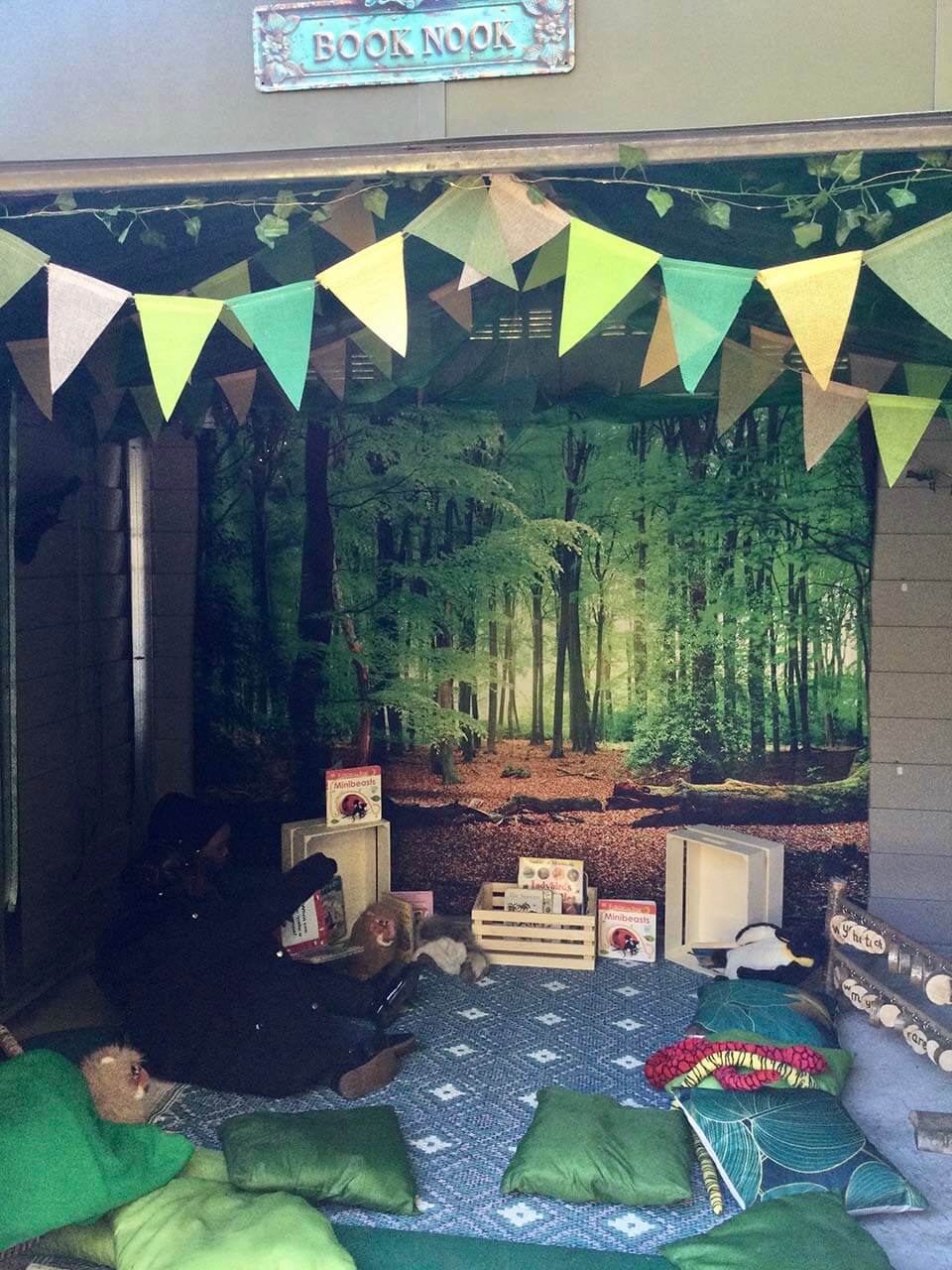
A book of the week every week – Books are shared as the key link to our planned learning, across the curriculum.
Song and Rhyme – Songs and rhymes have a hugely positive impact on a child’s language and literacy development. Children love rhyme, rhythm and repetition. These three things found in songs and rhymes can naturally help to boost a child’s language and literacy skills.
Phonics lessons – We teach the Little Wandle phonics scheme which begins in Nursery with Rhyme Time in the first term, then moves on to ‘Foundation to Phonics’ where children learn to tune in to phonemes and develop their oral blending skills. Then in Reception the children have daily lessons following the Little Wandle phonics scheme. Acquisition of blending and decoding skills then develops into reading and writing skill development.
Daily Handwriting – This begins in Nursery with a daily activity developing mark making skills progressively over the year and continues in Reception with learning correct letter formation.
Reading – Our Nursery parents are invited weekly to our ‘Booktime’ where we share our book of the week and the children choose a book to take home and share with parents. In our Reception class from October onwards all children take part in a guided read with their teacher 3 times per week, and take the same book home to share with parents. Our Reception class also visit the library and take home a new book each week.
Numeracy and Mathematics
Numeracy and Mathematics helps children develop the confidence and competence in using number which will assist them to solve problems, analyse information and make informed decisions based on calculations. Children develop their numeracy skills throughout the EYFS by experiencing high quality play activities and accessing a variety of resources and materials. Our Nursery class use the White Rose scheme which focuses on planned play opportunities led by adults with a gradual progression of early maths skills over the year. Our Reception class follow the NCETM Mastery of Mathematics curriculum, with short daily lessons and follow up activities. For some areas of Mathematics our Reception use the White Rose scheme.
Topic led learning
We have developed our long term plans for learning around 6 topics over the year, learning through topics helps children to make links across their learning. These topics have been carefully considered to ensure our EYFS children develop an understanding of themselves, their immediate environments (home and school), the people in community in which they live, and an understanding of the natural world from our own garden to places in the wider world. All our topics include a strong focus on vocabulary progression.
Our topics cover learning in all 7 areas of the EYFS curriculum:
- Personal and Social Development
- Communication and Understanding
- Physical Development
- Literacy
- Mathematics
- Understanding the World
- Expressive Arts and Design
Outdoors in our EYFS Unit